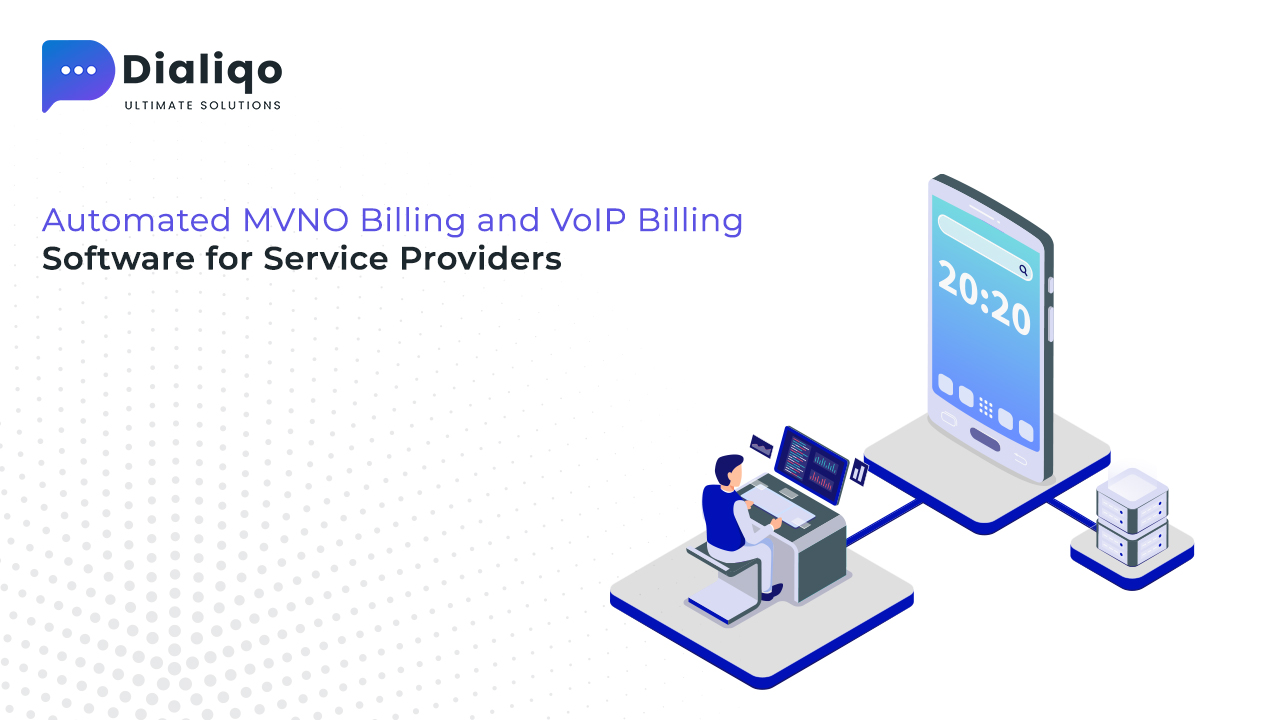
Automated MVNO Billing and VoIP Billing Software for Service Providers
Telecommunication service providers manage complex billing processes that involve voice calls, messaging services, data usage, roaming charges, and subscription plans. For companies operating in the VoIP and MVNO ecosystem, manual billing management is nearly impossible due to the high volume of transactions and diverse pricing models.
This is why automated VoIP Billing Software and MVNO Billing Software have become essential for modern telecom businesses. These systems allow service providers to automate billing operations, manage customer accounts, calculate usage charges, and generate accurate invoices.
For every VoIP Service Provider, having a reliable and scalable billing system ensures transparency, operational efficiency, and improved customer satisfaction.
This article explains how automated telecom billing systems work and why they are critical for VoIP and MVNO service providers.
What Is VoIP Billing Software?
VoIP Billing Software is a system that manages billing operations for voice-over-IP services. It tracks call data records (CDRs), calculates usage costs, applies pricing plans, and generates invoices for customers.
VoIP billing platforms typically support:
- call rating and charging
- prepaid and postpaid billing
- real-time balance monitoring
- invoice generation
- payment processing
- reseller billing management
For any VoIP Service Provider, billing software ensures accurate billing for thousands or even millions of call transactions.
What Is MVNO Billing Software?
An MVNO (Mobile Virtual Network Operator) offers mobile services without owning physical network infrastructure. Instead, MVNOs purchase network capacity from mobile carriers and resell services to customers.
Because MVNOs operate complex pricing structures, they require advanced MVNO Billing Software to manage:
- mobile voice usage
- SMS billing
- data usage billing
- roaming charges
- subscription plans
- reseller and partner billing
MVNO billing systems allow operators to automate charging and manage customer accounts efficiently.
Why Service Providers Need Automated Billing Systems
Telecom businesses process enormous volumes of usage data every day. Without automation, billing operations become inefficient and error-prone.
Automated VoIP Billing Software and MVNO Billing Software help service providers manage these challenges effectively.
Handling Large Transaction Volumes
Telecom systems generate thousands of call data records every minute. Automated billing systems process these records instantly.
Accurate Usage-Based Billing
Billing platforms calculate charges based on real-time usage data, ensuring customers are billed accurately.
Faster Invoice Generation
Automated systems generate invoices instantly and deliver them to customers through digital channels.
Reduced Operational Costs
Automation eliminates manual billing processes, reducing administrative overhead.
Key Features of VoIP Billing Software
Call Data Record (CDR) Processing
VoIP billing systems analyze CDRs to calculate call costs based on duration, destination, and pricing plans.
Real-Time Billing
Real-time billing allows service providers to monitor usage instantly and update customer balances accordingly.
Prepaid and Postpaid Billing Support
Modern billing platforms support both prepaid and postpaid billing models.
Flexible Pricing Plans
VoIP providers can configure various pricing structures such as:
- per-minute billing
- subscription packages
- tiered pricing models
- bundled services
Multi-Currency Billing
For global service providers, billing platforms support multiple currencies and taxation systems.
Key Features of MVNO Billing Software
Subscription Management
MVNO billing systems manage customer subscription plans and service packages.
Data Usage Billing
They calculate charges based on mobile data consumption.
Roaming Billing
MVNO systems automatically calculate roaming charges for customers traveling across regions.
Partner and Reseller Billing
MVNO operators often work with resellers and distributors. Billing systems track revenue sharing and commissions.
Customer Account Management
Customers can manage their accounts, view usage data, and track invoices through self-service portals.
Benefits for VoIP Service Providers
Automated billing systems provide several advantages for VoIP businesses.
Improved Revenue Management
Accurate billing ensures service providers capture all usage-based revenue.
Reduced Billing Errors
Automation eliminates manual errors that could lead to revenue loss or customer disputes.
Better Customer Experience
Customers receive transparent billing statements and real-time usage updates.
Scalability
Billing platforms allow service providers to scale operations as their subscriber base grows.
Integration with Telecom Infrastructure
Modern billing platforms integrate with telecom infrastructure components such as:
- VoIP softswitch systems
- SIP servers
- session border controllers
- telecom gateways
- CRM platforms
- payment gateways
This integration enables seamless billing workflows and real-time service management.
Security and Compliance in Telecom Billing
Billing systems handle sensitive customer data and financial transactions. Therefore, they must meet strict security standards.
Important security features include:
- encrypted payment processing
- fraud detection systems
- user authentication controls
- secure data storage
Compliance with telecom regulations and financial standards is also critical.
Future Trends in VoIP and MVNO Billing
Telecom billing technology continues to evolve as communication services expand.
AI-Powered Billing Analytics
Artificial intelligence can analyze billing data to detect anomalies and prevent revenue leakage.
Real-Time Charging Systems
Advanced platforms allow service providers to charge customers instantly based on service usage.
Integration with Cloud Telecom Platforms
Billing systems are increasingly deployed on cloud infrastructure for scalability and reliability.
Self-Service Customer Portals
Customers can manage subscriptions, review billing statements, and make payments online.
Choosing the Right Billing Solution for Your Telecom Business
Selecting the right billing platform is essential for telecom service providers.
An ideal billing system should provide:
- real-time billing capabilities
- scalability for growing customer bases
- flexible pricing configurations
- secure payment processing
- integration with telecom infrastructure
Companies like Dialiqo focus on building advanced communication solutions that integrate telecom infrastructure, AI-powered communication tools, and cloud-based platforms to support modern service providers.
Conclusion
Telecom businesses must manage complex billing operations involving voice calls, data usage, and subscription services. Manual billing processes cannot keep up with the scale and complexity of modern telecom networks.
Automated VoIP Billing Software and MVNO Billing Software enable service providers to process usage data, generate invoices, and manage customer accounts efficiently.
For any VoIP Service Provider, implementing a scalable and automated billing system ensures accurate revenue management, improved customer experience, and efficient telecom operations.
As telecom services continue to evolve, advanced billing systems will play a vital role in supporting the growth of communication service providers.
FAQs
1. What is VoIP Billing Software?
VoIP Billing Software is a system that tracks call data records (CDRs), calculates call charges, and generates invoices for customers using Voice over IP services.
2. What is MVNO Billing Software?
MVNO Billing Software is a telecom billing platform designed for Mobile Virtual Network Operators to manage billing for voice calls, SMS, mobile data usage, subscriptions, and roaming services.
3. Why do VoIP service providers need billing software?
A VoIP Service Provider needs billing software to automate usage-based billing, manage customer accounts, process large volumes of call records, and generate accurate invoices.
4. What features should VoIP Billing Software include?
Key features include call data record processing, real-time billing, prepaid and postpaid billing support, flexible pricing plans, invoice generation, and payment gateway integration.
5. Can MVNO billing systems support multiple pricing plans?
Yes. MVNO Billing Software allows operators to create multiple pricing plans, subscription packages, roaming charges, and reseller billing models.
6. Is automated billing important for telecom service providers?
Yes. Automated billing reduces manual errors, improves revenue management, processes large volumes of transactions efficiently, and enhances the overall customer billing experience.
7. Can VoIP billing systems integrate with telecom infrastructure?
Yes. Modern VoIP billing platforms integrate with telecom infrastructure such as softswitch systems, SIP servers, session border controllers, and CRM platforms.
